
SEARCH
REVIEWS
FEATURES
NEWS
Etcetera and
Short Term Listings
LISTINGS
Broadway
Off-Broadway
NYC Restaurants
BOOKS and CDs
OTHER PLACES
Berkshires
London
California
DC
Philadelphia
Elsewhere
QUOTES
On TKTS
PLAYWRIGHTS' ALBUMS
LETTERS TO EDITOR
FILM
LINKS
MISCELLANEOUS
Free Updates
Masthead
Writing for Us
A CurtainUp Review
Major Barbara-- Kabuki Style
By Lisa Quintela
| What is your religion?---Major Barbara I'm a Millionaire --- Undershaft |

Heidi Schreck as Major Barbara
(Photo: Adair Iaconosee ) |
Straying away from the impetus to Americanize or modernize Kabuki, O'Harra, who studied theater in Japan and Poland, instead uses the art form to illuminate a new perspective on Shaw's aged and visually limiting play. In this three-act debate, structured by conversations on social postulating, morality, and the military-industrial system and its enablers (charity and religion), O'Harra's troupe fuses the politically dense drawing-room rhetoric of Shaw's British bourgeois family with the physical and vocal vivacity of Japanese Kabuki. The two very distinct theatrical styles and cultures nevertheless inform one another throughout the plot, as they are similarly preoccupied with differences in class and gender.
Andrew Undershaft, a wealthy munitions manufacturer, returns home after many years abroad to determine which of his children should inherit the family business. His grown son Stephen, who is babied by a keyed-up mother, would rather study politics and live off the family fortune. Daughter Sarah is set on marrying her fiancé, a bumbling fool who's likely to ruin any business venture. Daughter Barbara has become a major in the Salvation Army, aiming for a life of soul-saving and charity alongside her adoring fiancé, Cusins, a greek professor who devotes his time to playing the drums in the Salvation Army band.
During the first act, staged on the second story of La MaMa's Annex Theater, the Kabuki technique of social gestures become applicable to Shaw's satire, as the family members engage in repetitive domestic routines such as cleaning or lighting their pipes. Justin Townsend's magnificent set, inspired by Japanese shoji, consists of a wall of bright red frames covered with turn of the century-designed wax paper. Upon the father's arrival, all exchanges are done in muted pantomime, while Composer Brendan Connelly sharply calls out the beat changes of an underscore of Asian-inspired music from his visible percussion perch offstage. The verbal silence allows spectators to pay attention, not only to the shifts in music that adorn and guide movement, but also to the gestures and reactions of the performers onstage. Soon after the muted scene is over, it is then entirely re-enacted, this time with performers delivering Shaw's lines in synch with the music.
The second act transports the entire audience to the downstairs lobby of the Annex, where monitors and televisions are dispersed throughout the stage that is set in the round. Undershaft visits Barbara's Salvation Army operation and socializes with several of society's stereotypical vagabonds and troublemakers, who are as willing to trade penitence for food as Barbara's father is to sell his deadly weapons to any country who will buy them. What follows after Major Barbara lets her father watch her save souls for the Salvation Army is a contest between faith and wealth. Throughout the act there are breaks in the conventional rhythm of Shavian sentences by over-emphasizing portions of some words over others; In one instance Cusin's response to a spiritually skeptically Undershaft is, "I thought we were dis(Cussing) religion." Other nuances include the use of film via mini wireless video cams that are positioned in key locations (on a mirror, inside the drinking cup of an old bum, and on Barbara's clipboard) and projected on the various television screens to provide differing angles of the performance as it takes place. As in traditional Kabuki theater, where there are trap doors onstage used as exits and entrances, O'Harra has employed the Annex's elevator as a versatile entryway.
Despite a cast that is not fully up to par with the Kabuki-like whirls and erratic spasms required to compliment the bold production, O'Harra's clever direction is evident as Bob Jaffe argues convincingly as Undershaft, and Heidi Schreck, who plays Barbara, emits an arrogant yet sweet charm to mask a trembling uncertainty. As Barbara's mother, Tina Shepard is the real major here. Ruling the Undershaft household with an iron fist, she aptly conveys the vocal gymnastics necessary for Kabuki-styled speech with its sharp rises and falls in tone. Nadia Mahdi also stands out as she delivers a dynamically tragic and comedic performance as the Salvation Army bully, Bill Walker.
The music of Brendan Connelly and the four-member ensemble weaves beautifully throughout the production with Peter Ksander's poignant lighting, while Tara Webb's attractive costumes combine Western suits with Kimono sleeves and Samurai pants. As the third act resumes in the upstairs space, and the characters visit Undershaftˆs munitions factory, the shoji backdrop rises to reveal the cavernous recesses of La MaMa's space as well as the pending demise of Barbara's saintly idealism. As "experimental" as downtown theater can get sometimes, O'Harra manages to succeed in staying true to Shaw's weighty script while uniquely deconstructing it to create imaginative and timely theater.
Editor's note: Unfortunately, this is a very short run so you have just one more long weekend to catch this unusual production. For more about Shaw and links to other plays reviewed, see our George Bernard Shaw backgrounder.
|
MAJOR BARBARA Playwright: George Bernard Shaw Directed by Brooke O'Harra Cast: Heidi Schreck, Bob Jaffe, Tina Shepard, Mike Mikos, David Brooks, Tatiana Pavela, Tom Lipinski, Derrick Karg, Johnny Klein, Lula Graves, Slaney Chadwick Ross, Nadia Mahdi, Laryssa Husiak Set Design: Justin Townsend Costume Design: Tara Webb Lighting Design: Peter Ksander Music Supervision: Brendan Connelly Running Time: 2 hours and 45 minutes with two intermissions La MaMa E.T.C (Annex Theater) 74A East Fourth St. (212) 475-7710. www.lamama.org Tickets: $15, open Seating From 1/12/06 to 1/28/06 Thu - Sun at 7:30pm, Sun at 2:30 pm and 7:30 pm Reviewed by Lisa Quintela based on 1/18/06 performance. |
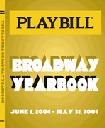
The new annual to dress up every Broadway lover's coffee table
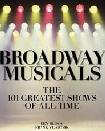
Easy-on-the budget super gift for yourself and your musical loving friends. Tons of gorgeous pictures.




>6, 500 Comparative Phrases including 800 Shakespearean Metaphors by our editor.
Click image to buy.
Go here for details and larger image.